
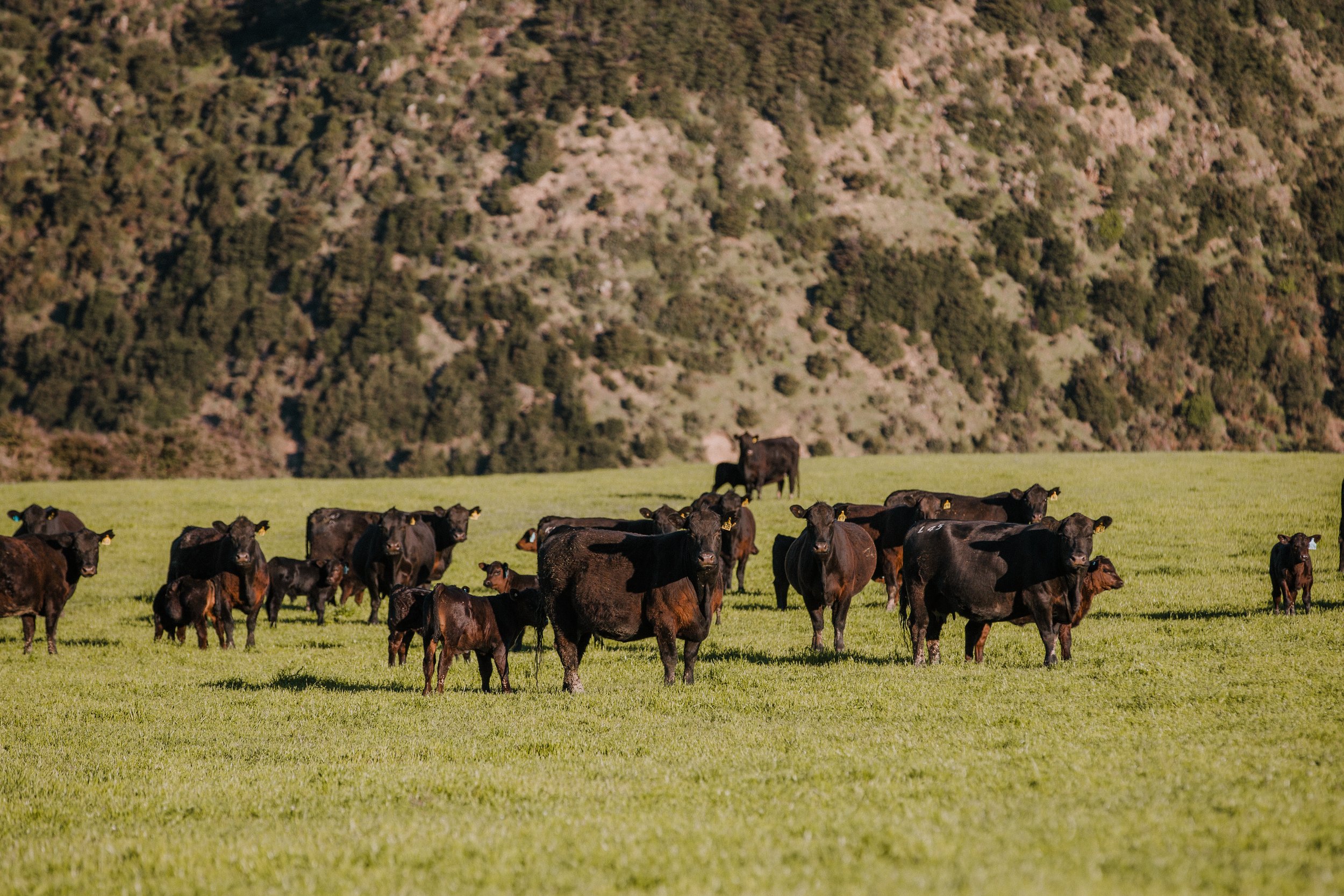
OUR COWS
In our females we are striving for an animal that will perform and is fit for our environment.
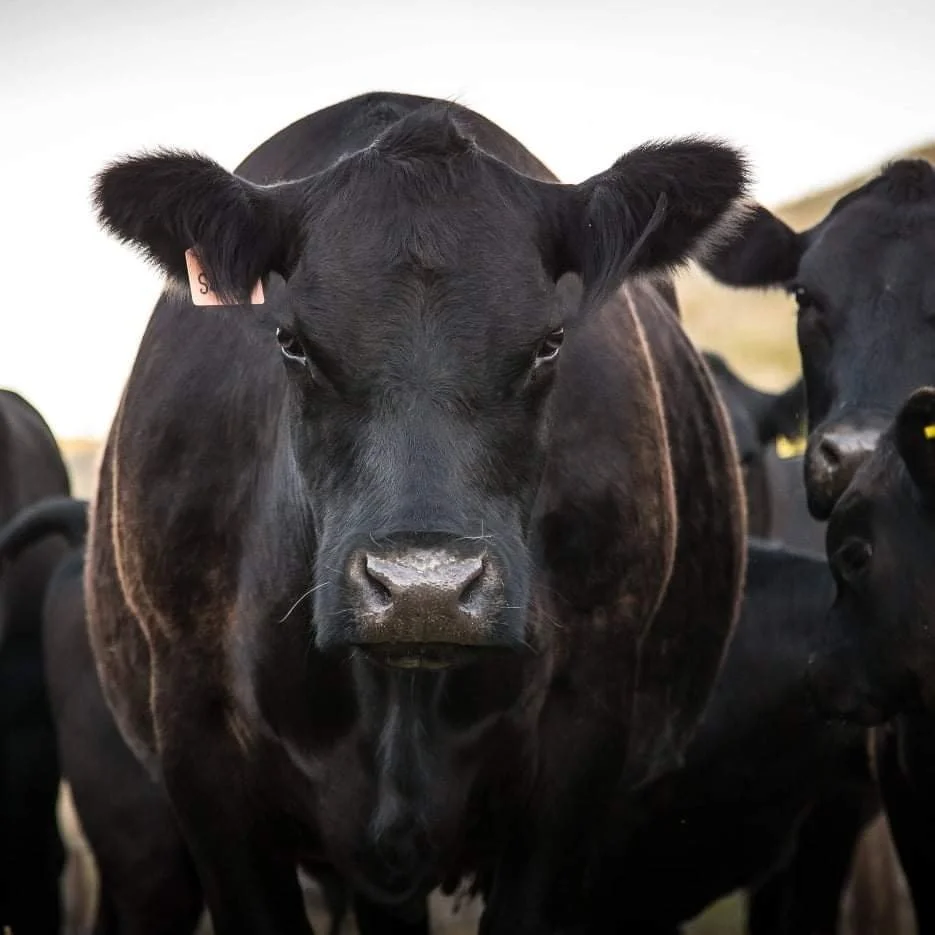
We don’t expect to change our environment for our cattle
The genetics we use to achieve this are carefully selected for hardiness/constitution, maternal excellence, meanwhile being mindful of achieving a 260 – 300kg carcass weight animal to slaughter at 18 months.
There are certain bloodlines that are proving themselves. Although there are not many that are suitable, we continue to identify the ones that are. Flushing elite cows or using their sons in the herd is the ultimate.
Herd Focus
There is much talk about selection and what traits people want to improve on.
Weaning weight seems to be a popular target. This is understandable as a lot of cattlemen are selling calves so why not have them heavier! This of course is not the only way to improve overall kgs of meat sold out the farm gate.
Stocking rate followed by fertility are the biggest contributors to weight out the gate. I see a lot of cow calf operations where they are pinched at crucial times with a young calf and no matter what the genetic potential is it will never be expressed.
This is the reality of sheep and beef systems and the cow needs to bethe shock absorber in tight times.
Here is an example of two similar sized herds with different focuses. One herd has focused on weaning weight EBVs and one on stocking rate and weaning percentage.
Herd A
Chased high weaning weight EBVs (average of bull team = +50)
400 cows mated
80% calves weaned = 320
Average calf weight = 240kg
320 calves @ 240kg = 76,800 kg
Herd B
Runs higher stocking rate and worked on fertility. (Average weaning weight of bull team = +30)
440 cows mated (10% higher stocking rate from a more moderate lower growth higher body condition herd).
85% calves weaned = 374
Average calf weight (10kg difference in genetic sire effect = 230kg
Total weight weaned = 86,020kg
If the calves were sold on an even $ per kg.
At $4.50 per kg (average for heifers and steers currently)
The difference is 9,220kg live weight @ $4.50 = $41,490
It could be argued that it is difficult to run an extra 10% of cows and weaning weight is affected. But even if you dropped the weaning weight by another 10kg on the higher SU fertile herd it still wins by $24,600 and that is comparing a high average 200day weight sire team vs a low average 200d team. You would also have more cows to sell out the other end with the low 200d model.
The point is, we need to drill into what the real profit drivers are in your business and what is the lowest hanging fruit. It may be time to chase early growth, as the stocking rate and reproductive performance are already good and the weaning weight growth is the cream on top.
We have been working on adding early growth into our cattle but not at the expense of constitution and fertility.
Be careful not to be blindsided by performance per head at the detriment of profit per ha.
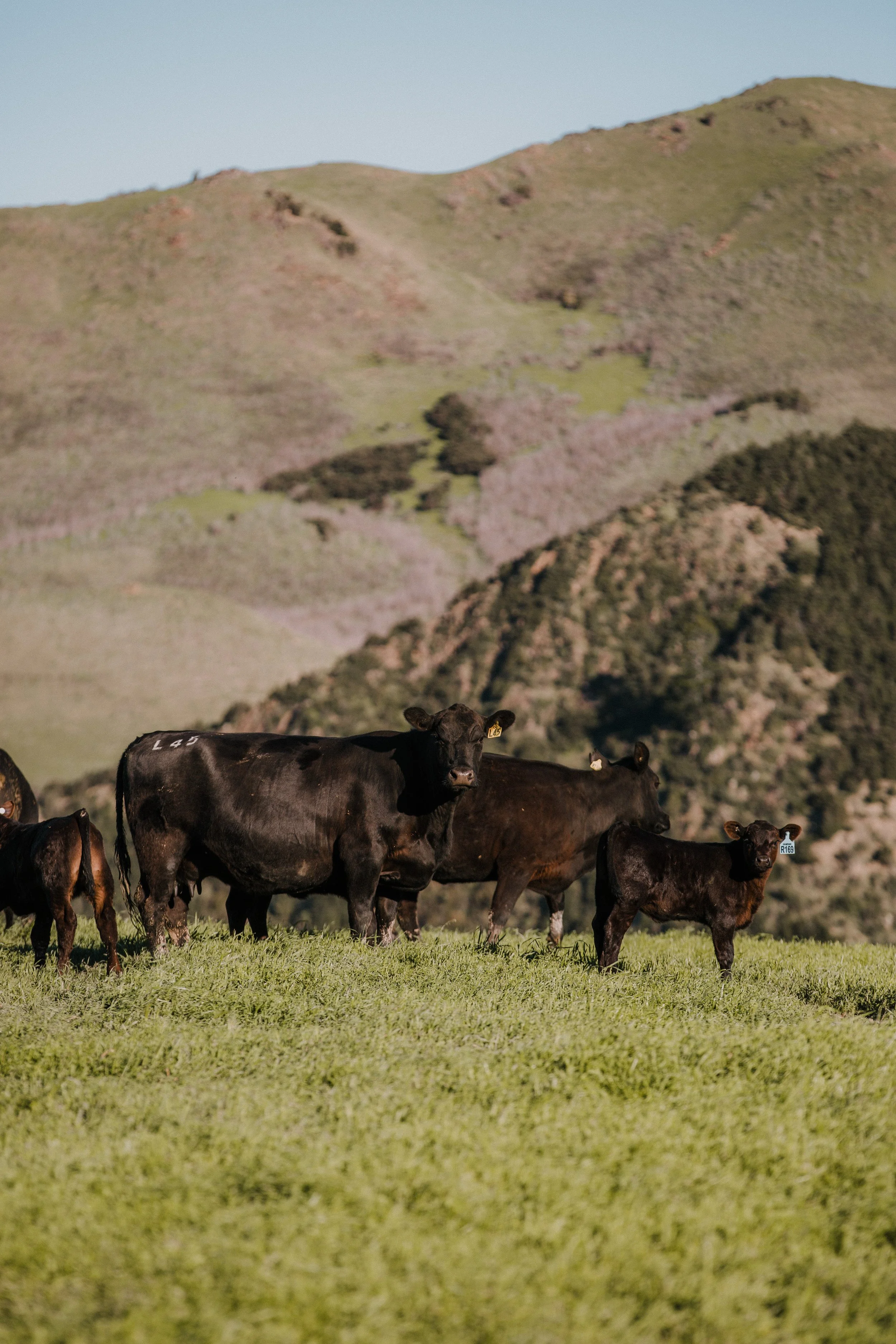
A competitive Cow
We hosted Bullwalk the other day which is always a tiring long day but one which consists of thought provoking chats with clever farmers. It got me thinking deeply about making a difference to commercial cow performance (as always). What does the data we currently have mean and how can we improve.
Firstly, a bit of history of how we began this challenge.
When we started Breeding, alongside purchasing registered cows and implanting embryos we screened what we considered to be top cows from our commercial herd. These cows were doing a lot of things well and had been pushed hard over the years which let nature cull them. We selected cows over 5 yrs old at subsequent calf markings that were in good condition with top calves. That was phase one, alongside being sound and quiet. Not many of these cows made an impact and still feature in the pedigrees but the top ones are elite. So the theory was, pick the finished product in the environment we are trying to breed for and select the right cow to breed cows, not the right bull to breed bulls.
An average mature cow weight is around +95 on BREEDPLAN for both Angus Breed Societies. What’s going on here and what does this mean? We now have a big spread of MA cow weight data in our herd. Genomics has really pushed things around. We have a bull in our sale catalogue with an EBV of +13 and one of +145. I was asked yesterday if I actually believe it…
I think that both extremes would gravitate back to the centre once they have progeny recorded but I spose it is possible.
Our average cow this year weighed 585kgs. But there are cows there that don’t have anymore frame, are good doing and would have kept more condition for themselves than others that are 100 kgs above the average. Then at the other end of the scale the most moderate cows weighed were in the 400s. (Not allowing for age). As time has gone on the big cows have mostly fallen out or been culled for being too inefficient. Which means our spread of type is fairly tight and continues to get tighter. That being said getting back to the EBV spread, I guess it’s possible to have modern cows in the breed with a breeding value of +13 vs +150. But the +150 is much more common. If the bull passes on half of his genes then you would expect the cows from either bull to be on average 60-70 kgs apart. Quite doable.
So how scary is the bull with the really low MA cow weight?
In real life terms I always circle back to the average calf off the hill weaning at somewhere between 200kgs to the top end at 240kgs. From what I have seen at sales there aren’t many sizable lines of commercial calves weaned over 230kgs with a reasonable stocking rate. So if we want to wean anywhere near half of the cows body weight she needs to weigh under 500kgs. Not very common this day and age. There are a lot of stud cows out there weighing 800kg or more.
My guess is the breed average of +90 translates to about a 600kg cow. The information I got from Angus Australia told me it was about that and it feels about right if not a little low. So.. if you’re a cow calf man trying to run an efficient herd of cows, the cow at 565kg (progeny of +13 MA EBV bull over breed average cows) weaning a 225kg calf = 39.8% vs the cow at 635kg (progeny of +140 EBV over breed average cows) has to wean her calf at 251kg to match the first cow for calf weaned per kg of live-weight. As mentioned above a line of 250kg commercial calves is rare under regular farming practices. I would also say the line of cows at 630kg would be tough to achieve as well. So environment will dumb this down to some extent also. This leads onto the need for a body condition score EBV which is in the pipeline and to some extent available now. The more moderate cow takes less to maintain so naturally carries a higher body condition score which leads to better in calf rates. If this is the case she will also wean more calves and be less likely to die in the winter. The body condition score EBV will shed more light on this.
So when looking at MCW EBVs a lot runs through my mind and it’s not just about making the numbers look pretty on paper but thinking about how it affects the man running a cow and how we can make the cow more profitable. For most operators the middle of the road feels about right as there is still a need to get a steer killed at 18months up to weight (say 280kg CW). It’s good to know what breed average actually translates to and whether or not it’s a good mid point as it’s changing all the time. Cow weight has been going up at a similar speed to early growth which takes the profit out of things. As they say “Genetic change, not Genetic improvement”.
Food for thought.